


Bragadin Arch
Viale Rubin de Cervin, 15
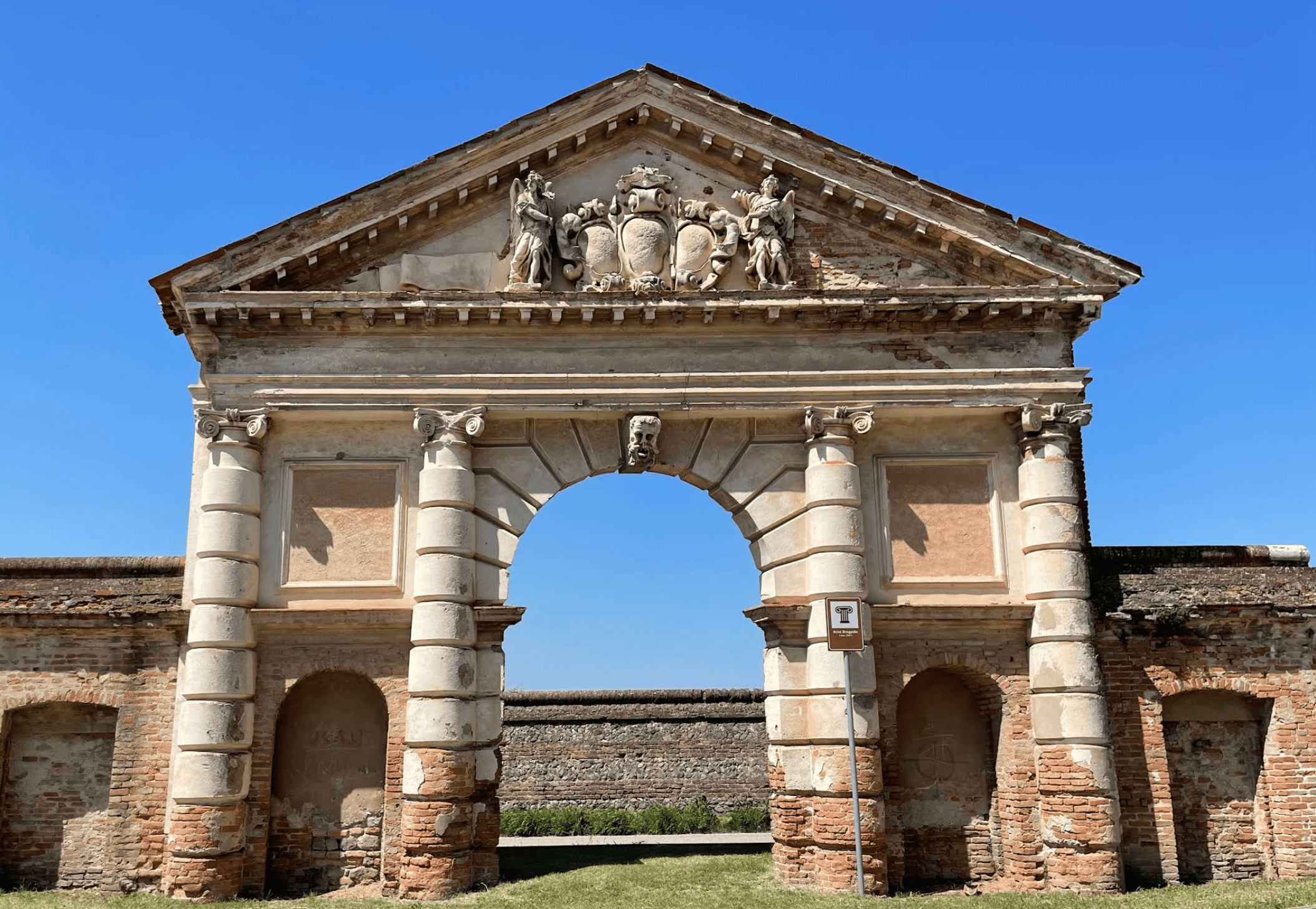
The Bragadin Arch is a splendid ornamental structure dating back to the late 17th century. Originally, it served as the entrance to the estate of the Bragadin family, a prominent patrician lineage from Venice. Today, it stands as a symbol of Este’s rich cultural heritage.
Information about this monument, which clearly reflects a 17th-century architectural style, is rather limited, as the area in which it is located was for a long time part of the brolo (orchard-garden) of the Albrizzi estate. It is still uncertain whether the main residence associated with the arch was the rather modest-looking building visible to the right at the entrance to the new district named after the Rubin de’ Cervin Albrizzi family.
The entire area, which holds great archaeological significance, has only been the subject of scientific investigation in relatively recent times. For nearly two centuries, it was subjected to looting and spoliation, and during the 20th century, it became an area marked by housing developments and urban expansion. It was only thanks to the intervention of the Archaeological Superintendence that some areas, previously designated for modern construction, were preserved, allowing for their recovery and enhancement—as can be seen today.
Este


PR FESR 2021-2027
Azione 1.3.7 Sostegno alla competitività del sistema commerciale e valorizzazione dei distretti del commercio
Bando a supporto di progetti finalizzati alla rigenerazione urbana e alla ripresa economica nell'ambito dei distretti del commercio anno 2023
DGR 956 del 31 Luglio
Obiettivo Specifico 1.3 “Rafforzare la crescita sostenibile e la competitività delle PMI e la creazione di posti di lavoro nelle PMI, anche grazie agli investimenti produttivi (FESR)”
1.3.7 “Sostegno alla competitività del sistema commerciale e valorizzazione dei distretti del commercio”
Il progetto SmartGuide è stato realizzato nell'ambito delle azioni di valorizzazione e innovazione promosse dal Distretto del Commercio di Este.
L'intervento ha consentito la realizzazione di una piattaforma digitale accessibile tramite oltre 40 QR Code installati presso monumenti, luoghi storici e punti di interesse della città, permettendo a cittadini e visitatori di accedere a contenuti culturali, turistici e informativi direttamente dal proprio smartphone.
L'obiettivo del progetto è migliorare l'esperienza di visita del centro storico, favorire la conoscenza del patrimonio culturale cittadino e promuovere in modo integrato le attività economiche e i servizi presenti nel territorio.