



Villa Kunkler
Via George Byron, 6, 35042 Este PD
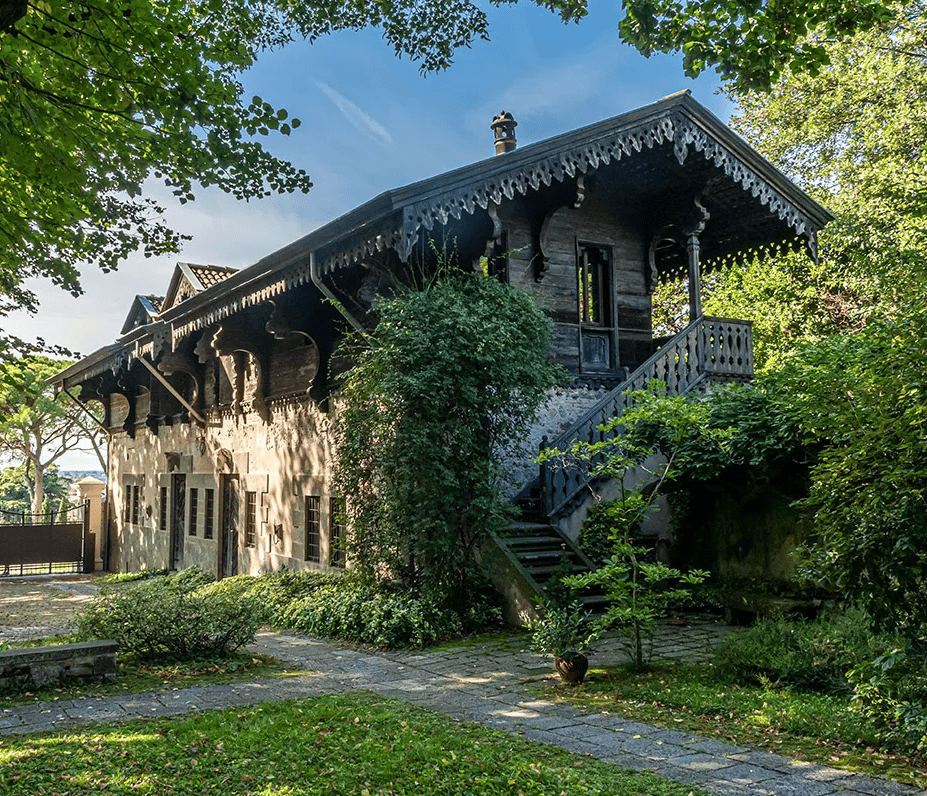
Villa Kunkler, also known as Villa Byron, is an authentic historical and cultural jewel that embodies the romantic spirit of the 19th century. This magical place, where poetry, art and nature merge, is closely linked to illustrious figures of romantic literature such as George Gordon Byron, Percy Bysshe Shelley and Mary Shelley. The villa, originally a Capuchin convent, was later transformed into a private residence, becoming an ideal refuge for poets and intellectuals. In 1894, on the facade of the house, next to the room where the memories of the poets' stay are believed to have been kept, an inscription dictated by the Este poet Gaetano Sartori Borotto was walled up: «Giorgio lord Byron / in 1817 and 1818 / lived in this villa / had as a guest / Shelley / and here he wrote, ranging / through nature and the castle / with wings of immense imagination». Although Byron only rented the villa from the English consul in Venice, its charm struck him deeply. However, in reality, Byron used it more as a practical solution than a personal one: in the summer of 1818, to avoid Claire Clairmont, a young woman with whom he had had a brief affair, Byron gave the villa to Shelley and her family. Shelley, Claire and later Mary Shelley (with their daughter) took up residence in the villa for about two months, although their stay was marked by the tragic death of the child. Despite the mourning, the period spent in Este was extraordinarily prolific for Percy B. Shelley. He chose a pavilion in the garden of the villa as a place of work, and it was there that two of his masterpieces were born: the poetic dialogue Julian and Maddalo and the lyric drama Prometheus Unbound. He was also inspired by the breathtaking view of the Euganean Hills to compose the poem Verses Written Among the Euganean Hills, where the Hills emerging from the autumn mists are transformed into a metaphor for salvation: islands of serenity in a sea of suffering. During the 19th century, the villa passed to the Kunkler family, who made important transformations. Adolf Kunkler, a horse enthusiast, built a unique stable, the famous “palasso de tola”. This building, designed in Alpine style and embellished with refined wooden details by the artist Valentino Panciera, known as Basarel, added a touch of originality to the property. The villa, with a “U” structure, is developed around a central courtyard. Separate entrances lead to elegant spaces, including living rooms, a library and reception areas. All around is an enchanting park, populated by centuries-old trees and overlooking the Euganean Hills, which with their timeless charm recall the romantic atmosphere that inspired the famous poets of the past. Today, despite being a private property and accessible only on certain occasions during the year, Villa Kunkler is a symbol of the history and culture of Este, an irresistible attraction for lovers of literature and art. The memory of its illustrious guests, combined with its architectural and natural charm, continues to evoke an era of extraordinary creativity and romanticism, transporting anyone who approaches it to the pulsating heart of the 19th century.
Este

PR FESR 2021-2027
Azione 1.3.7 Sostegno alla competitività del sistema commerciale e valorizzazione dei distretti del commercio
Bando a supporto di progetti finalizzati alla rigenerazione urbana e alla ripresa economica nell'ambito dei distretti del commercio anno 2023
DGR 956 del 31 Luglio
Obiettivo Specifico 1.3 “Rafforzare la crescita sostenibile e la competitività delle PMI e la creazione di posti di lavoro nelle PMI, anche grazie agli investimenti produttivi (FESR)”
1.3.7 “Sostegno alla competitività del sistema commerciale e valorizzazione dei distretti del commercio”
Il progetto SmartGuide è stato realizzato nell'ambito delle azioni di valorizzazione e innovazione promosse dal Distretto del Commercio di Este.
L'intervento ha consentito la realizzazione di una piattaforma digitale accessibile tramite oltre 40 QR Code installati presso monumenti, luoghi storici e punti di interesse della città, permettendo a cittadini e visitatori di accedere a contenuti culturali, turistici e informativi direttamente dal proprio smartphone.
L'obiettivo del progetto è migliorare l'esperienza di visita del centro storico, favorire la conoscenza del patrimonio culturale cittadino e promuovere in modo integrato le attività economiche e i servizi presenti nel territorio.